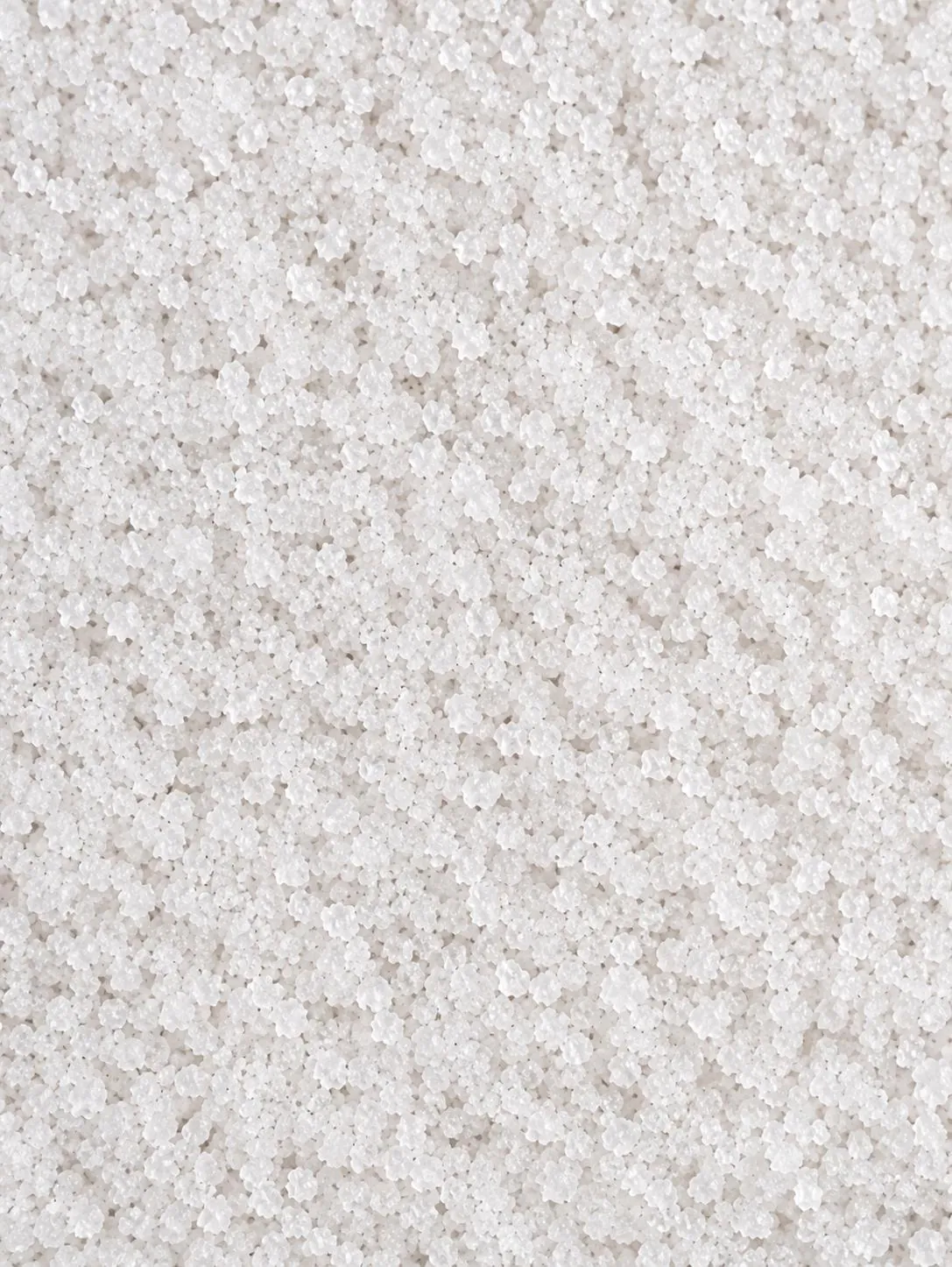
What is potassium chloride?
Potassium chloride (KCl, E508) is a salt made of potassium and chloride. It looks like table salt, dissolves like table salt and tastes salty, with a bitter edge at higher doses.
Why replace sodium chloride at all?
Most adults eat about 11 g of salt a day, more than twice the WHO's limit of 5 g.[1] In January 2025 the WHO suggested lower-sodium salt substitutes containing potassium for adults.[2]
How much can you swap?
Many products take a 20–30% swap with little or no change in taste. Snacks with topical seasoning can often go higher.
Taste and masking
Above about 30%, bitterness becomes noticeable. Yeast extracts, herbs and umami ingredients help.
Labels and claims
In the EU, a 25% cut in sodium allows a "reduced sodium" claim under Regulation 1924/2006. Check with your regulatory team.
Where KCl comes from
Until now: mines and salt lakes. From 2028: seaweed.

- WHO. Sodium reduction fact sheet, 2023.
- WHO. Guideline: use of lower-sodium salt substitutes, 2025.